Child Growth: Understanding Weight and Height Charts

How to read your child's growth charts? When to worry? A complete guide for parents on monitoring growth.

Your pediatrician shows you your child's growth chart and you wonder what those lines and percentiles mean? This guide explains everything.
Remember
Every child grows at their own pace. Growth charts are not goals to achieve but tracking tools. What matters is that your child follows THEIR curve harmoniously.
How to Read a Growth Chart
Reference Charts
Growth charts are based on statistics from populations of healthy children. They show how weights and heights are distributed at each age.
Percentiles Explained
Being at the 10th percentile doesn't mean being "small" - it simply means your child is among the 10% of children their age who are lighter or smaller. That's perfectly normal!
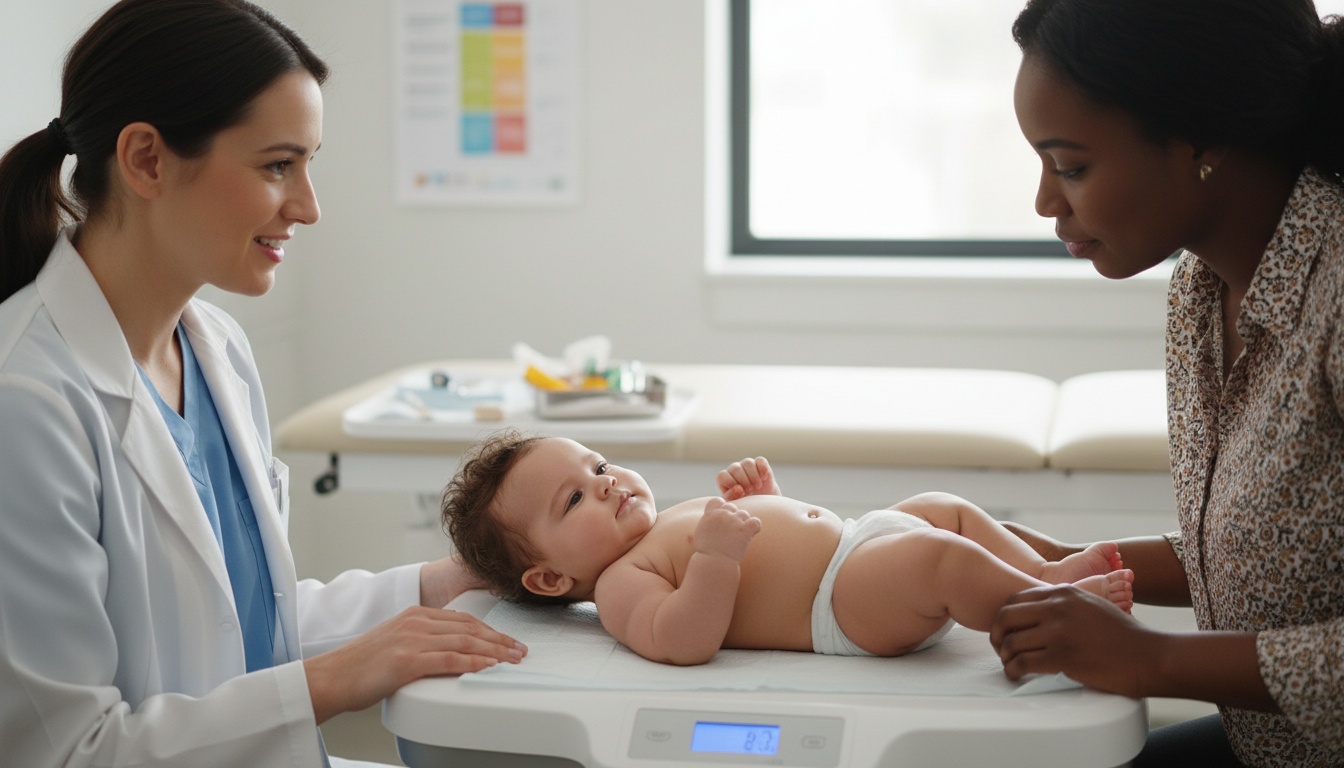
The Three Charts to Monitor
1. Weight Chart
| Period | Normal Weight Gain |
|---|---|
| 0-3 months | 0.9-1 oz/day (25-30g) |
| 3-6 months | 0.7 oz/day (20g) |
| 6-12 months | 0.35-0.5 oz/day (10-15g) |
| 1-2 years | 4-6 lbs/year (2-3 kg) |
| 2-12 years | 4-5 lbs/year (2-2.5 kg) |
2. Height Chart
| Period | Average Growth |
|---|---|
| 1st year | 10 inches (25 cm) |
| 2nd year | 5 inches (12 cm) |
| 3rd year | 3 inches (8 cm) |
| 4-puberty | 2-2.5 in/year (5-6 cm) |
| Puberty | Growth spurt |
3. Head Circumference (0-3 years)
Brain Development Monitoring
Head circumference increases rapidly in the first months:
- Birth: ~13.8 in (35 cm)
- 1 year: ~18.5 in (47 cm)
- 3 years: ~19.7 in (50 cm)
This measurement helps monitor brain development.
What's Normal
Normal Variations
- Single, temporary curve crossing (illness, growth spurt)
- Child following 10th or 90th percentile consistently
- Slight dip during introduction of solid foods
- Catch-up after illness

When to Worry
See a Doctor If You Notice
- Curve break: Sudden channel change (e.g., 50th to 10th percentile)
- Plateau: Weight or height not increasing for several months
- Weight loss in a child (except newborn)
- Abnormal head circumference: Too fast or too slow
- Large gap between height and weight (underweight or overweight)
Possible Causes of Growth Delay
Nutritional causes
Insufficient food, food allergies, absorption problems
Hormonal causes
Growth hormone deficiency, hypothyroidism
Chronic diseases
Celiac disease, cystic fibrosis, heart conditions
Genetic factors
Short family stature (short parents), genetic syndromes
BMI in Children
BMI = Weight (kg) / Height² (m)
In children, BMI is interpreted differently than in adults because it varies with age. Specific body mass index charts are used.
The Adiposity Rebound
Around age 6, BMI naturally rises (adiposity rebound). An early rebound (before age 5) is a risk factor for future obesity and should be monitored.
How to Promote Good Growth
Pillars of Growth
Balanced Diet:
- Protein: meat, fish, eggs, legumes
- Calcium: dairy products, fortified foods
- Vitamin D: supplementation recommended
- Iron: red meat, green vegetables
Sufficient Sleep:
- Newborn: 16-17h
- 1-2 years: 11-14h
- 3-5 years: 10-13h
- 6-12 years: 9-12h
Physical Activity:
- At least 1 hour of moderate activity daily
- Limit screen time

Monitoring Exams
| Exam | Recommended Frequency |
|---|---|
| Weight/height | Every check-up |
| Head circumference | Until 3 years |
| BMI chart | From 2 years |
| Blood test | If abnormality detected |
| Bone age (X-ray) | If growth delay |
Predicting Adult Height
Prediction Formulas
Tanner Formula (approximate):
- Boy: (Father's height + Mother's height + 5 in) / 2
- Girl: (Father's height + Mother's height - 5 in) / 2
These formulas give an estimate with a margin of ± 3.3 inches (8.5 cm).
Conclusion
Growth monitoring is a valuable tool, but it shouldn't become a source of anxiety. What matters is that your child:
- Follows their own curve consistently
- Is in good general health
- Develops harmoniously
"Don't compare your child to others. Every child has their own growth rhythm, determined by their genetics, diet, and environment. A small child can be perfectly healthy!
"
If in doubt, your pediatrician is your best ally for interpreting charts in the context of your child's overall health.
Prêt à organiser vos données médicales ?
Genki vous aide à centraliser et comprendre tous vos documents de santé, sans cloud, directement sur votre appareil.
Essayer Genki gratuitement