Understanding Your Prescription: Dosage, Generics, and Drug Interactions
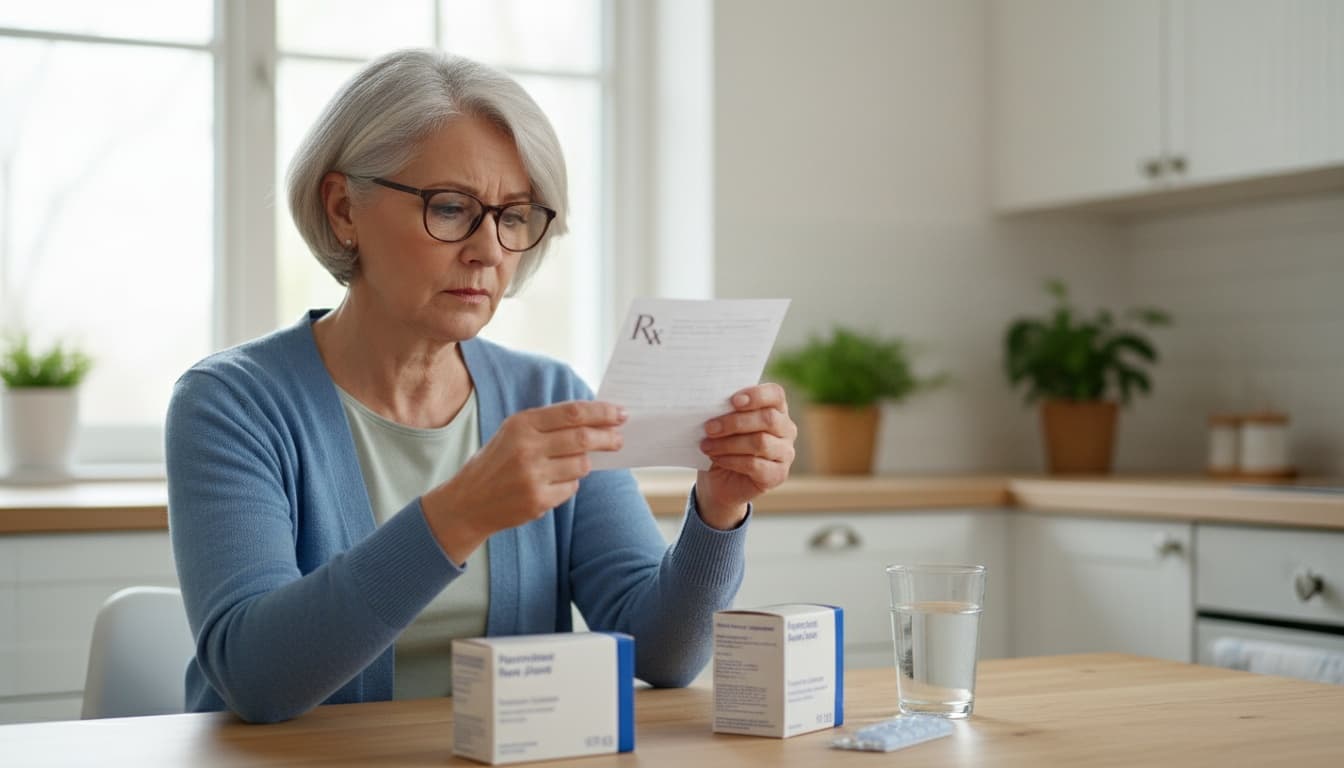
Learn how to read prescriptions: dosage instructions, treatment duration, generic medications, and what you need to know about drug interactions.

A prescription can sometimes look like an encrypted document with its abbreviations and complex instructions. This guide helps you understand what your doctor has prescribed.
Important
Never modify your treatment without medical advice. If in doubt about your prescription, consult your pharmacist or doctor.
Anatomy of a Prescription
A valid prescription must contain several required elements:
Prescriber identification
Name, credentials, address, license number, signature
Patient identification
Name, date of birth, sometimes weight for children
Prescription date
Essential for validity (varies by medication type)
Medications prescribed
Drug name (generic or brand), dosage, form, instructions, duration, quantity
Understanding Dosage
Dosage indicates how to take your medication.
Common Abbreviations
| Abbreviation | Meaning |
|---|---|
| tab | tablet |
| cap | capsule |
| mg | milligram |
| g | gram |
| mL | milliliter |
| IU | International Unit |
Timing of Doses
Common Expressions
- QD = once daily
- BID = twice daily
- TID = three times daily
- PRN = as needed
- AC = before meals
- PC = after meals
- HS = at bedtime
Why Timing Matters
Absorption depends on context
- Empty stomach: faster absorption, stronger effect
- With food: better digestive tolerance
- At night: some medications work better (statins, blood pressure meds)
Generic vs Brand Name
What is a Generic Drug?
A generic drug contains the same active ingredient as the brand-name drug, in the same dose and form.
Example: Acetaminophen (generic) = Tylenol (brand name)
Generic Medications
| Criteria | Brand Name | Generic |
|---|---|---|
| Active ingredient | Identical | Identical |
| Dose | Same dose | Same dose |
| Effectiveness | Comparable | Comparable (bioequivalence required) |
| Inactive ingredients | Specific | May differ |
| Price | Higher | Usually lower |
Generics have the same effectiveness as brand-name medications. They must prove bioequivalence to be approved.
Why 'Dispense As Written'?
If your doctor writes "DAW" (Dispense As Written), the pharmacist cannot substitute a generic. This is rare and usually justified (allergy to an inactive ingredient, narrow therapeutic index).
Drug Interactions
Watch for combinations
Some medications don't mix well. Always inform your doctor and pharmacist of ALL medications you take, including over-the-counter drugs and supplements.
Common Interactions to Know
Important Interaction Examples
- Blood thinners + Aspirin: increased bleeding risk
- Some antibiotics + Birth control: possible reduced effectiveness
- Statins + Grapefruit: increased muscle toxicity
- NSAIDs + Lithium: lithium overdose risk
- Antidepressants + St. John's Wort: serotonin syndrome
Alcohol and Medications
Important
Alcohol amplifies the sedative effects of many medications and can cause dangerous drowsiness, especially when driving.
Prescription Validity and Refills
Duration of Validity
| Prescription Type | Validity |
|---|---|
| Standard prescription | Varies by state/country |
| Controlled substances | Stricter limits apply |
| Contraceptives | Usually up to 1 year |
Refills
Short-term treatment
No refills planned. Consult if symptoms persist.
Chronic treatment
Often refillable (note indicates number of refills)
Expired prescription?
The pharmacist may provide an emergency supply for chronic medications, but see your doctor soon.
Special Notes
Medications Requiring Extra Caution
Warning Labels
- Drowsiness warning: Avoid driving
- Pregnancy warning: Not safe during pregnancy
- Take with food: Reduces stomach upset
Practical Tips
Keep your prescriptions
Save them for at least 1 year for reference and insurance.
Ask questions
Don't hesitate to ask the pharmacist to explain dosage.
Use a pill organizer
For complex treatments, a pill organizer prevents missed doses and confusion.
Centralize your data
With Genki, keep a history of all your treatments.
How to Use Genki for Your Prescriptions
With Genki, you can:
- Scan your prescriptions and import them automatically
- Extract medications with their dosages
- Keep a history of all your treatments
- Ask questions to the AI about your medications
Useful feature
When seeing a new doctor, you can show them your complete treatment history stored in Genki.
"If you suspect an adverse effect, contact your doctor. You can also report side effects through official channels in your country.
"
Prêt à organiser vos données médicales ?
Genki vous aide à centraliser et comprendre tous vos documents de santé, sans cloud, directement sur votre appareil.
Essayer Genki gratuitement