What All-Nighters Really Do to Your Body (As Seen in Your Blood Work)

Pulled an all-nighter? Several? Here's what's happening in your blood — and why your body keeps the evidence far longer than you think.

You pulled an all-nighter. Maybe several. You tell yourself you'll "catch up" on the weekend. But your body has already started changing — and the traces are visible in your blood work.
Sleep Debt Isn't an Abstract Concept
Every night without sleep triggers a cascade of hormonal, metabolic, and immune changes. Some resolve in a few days. Others take weeks.
What Happens After Just One All-Nighter

Within 24 Hours
Hormonal Chaos
Cortisol: Normally low in the evening, it stays elevated → difficulty falling asleep even when you finally can.
Insulin: A single night without sleep makes you temporarily pre-diabetic. Glucose stays in the blood longer.
Hunger: You're hungrier AND have fewer satiety signals. The perfect combo for poor food choices.
After 24-48h
Systemic Inflammation
CRP (inflammation marker) increases. Your immune system reacts as if you were sick.
Disrupted Thyroid
Conversion of T4 to T3 (active thyroid hormone) slows down. You feel more tired, metabolism sluggish.
Testosterone Drop
In men, one night without sleep can reduce testosterone by 10-15% the next day.
The Damage Cascade
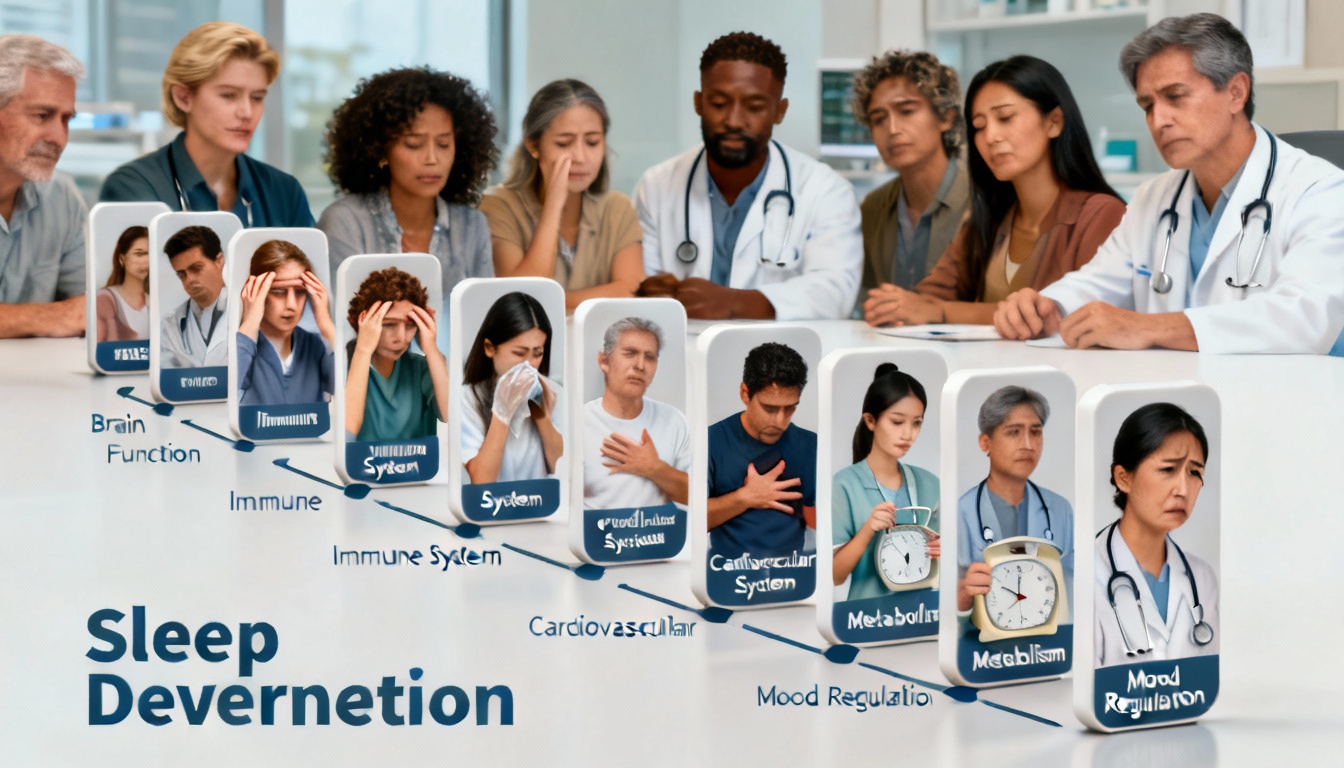
| Duration Without Adequate Sleep | Main Effect | Blood Marker Affected |
|---|---|---|
| 1 night | Acute insulin resistance | Glucose, fasting insulin |
| 2-3 nights | Chronic inflammation | hsCRP, IL-6 |
| 1 week | Hormonal dysregulation | Cortisol, TSH, testosterone |
| 2+ weeks | Oxidative stress | Antioxidant markers |
| Chronic | Accelerated aging | Telomeres, IGF-1 |
Specific Markers to Watch
1. Glucose and HbA1c
The Effect on Blood Sugar
A meta-analysis showed that sleep restriction (even 4-5h/night for a week) increases:
- Fasting glucose by 5-10%
- Post-meal peaks by 20-30%
- HbA1c long-term if pattern repeats
2. Cortisol (Pattern)
| Healthy Pattern | Sleep-Deprived Pattern |
|---|---|
| Peak in morning | Blunted or absent peak |
| Gradual decline | Stays elevated all day |
| Low in evening | Elevated at night (prevents sleep) |
The vicious cycle: you don't sleep → cortisol high at night → you can't fall asleep → you don't sleep...
3. hsCRP and Inflammation
Silent Inflammation
A study on people sleeping < 6h/night for 1 week showed:
- hsCRP x 2.5 compared to the 8h group
- This inflammation is linked to cardiovascular risk and cognitive decline
4. Thyroid Hormones
How Long to Recover?
The Bad News
"Sleep debt" isn't fully recoverable. Studies show that even after a week of "catch-up" sleep, some markers haven't returned to baseline.
Estimated Recovery Time
| Marker | After 1 All-Nighter | After Chronic Deprivation |
|---|---|---|
| Alertness | 1-2 nights | 1-2 weeks |
| Insulin sensitivity | 2-3 days | 1-2 weeks |
| Cortisol pattern | 3-5 days | 2-4 weeks |
| Inflammation (hsCRP) | 1 week | 2-4 weeks |
| Cognitive performance | 2-3 days | Potentially permanent (if chronic) |
How to Minimize the Damage
If You MUST Pull an All-Nighter
Mitigation Strategies
Before:
- Sleep banking: get 9h the 2-3 nights before if possible
- Eat light and protein-rich
During:
- Bright light to maintain wakefulness
- Strategic caffeine (not after 4am if you want to sleep the next day)
- Protein snacks (avoid sugars)
After:
- DON'T sleep all day (it destroys your rhythm)
- 90 min nap max
- Go to bed 1-2h earlier than usual
- Morning light the next day
For Long-Term Recovery
Prioritize 7-8h Sleep
For at least 2 weeks. Non-negotiable.
Respect Your Chronotype
Go to bed and wake up at fixed times, even on weekends.
Avoid Harmful Compensations
No alcohol "to sleep," no sleeping pills except by prescription.
Get Blood Work
If chronic pattern: check glucose, HbA1c, cortisol, thyroid, hsCRP.
The Reality of "Short Sleepers"
The 4-Hour Sleeper Myth
Some claim to only need 4-5h of sleep. The reality:
- < 1% of the population has a genetic mutation (DEC2 gene) allowing short sleep without effects
- Others are simply used to being under-performing and don't realize it
- Cognitive studies show deficits even in those who "feel fine"
With Genki
Track Sleep's Impact
With Genki:
- Keep a history of your labs
- Correlate your results with periods of stress/sleep deprivation
- Identify patterns before they become chronic
- Everything stays private and local
The Final Message
"Every all-nighter is a high-interest loan against your health capital. You can borrow occasionally, but the debt accumulates.
The question isn't "can I survive without sleep?" but "at what cost?"
"
Your blood doesn't lie. It records every sacrificed night. The good news: it also records every recovery night. Start tonight.
Prêt à organiser vos données médicales ?
Genki vous aide à centraliser et comprendre tous vos documents de santé, sans cloud, directement sur votre appareil.
Essayer Genki gratuitement